

Exercises for Seniors: Staying Active at Any Age
Staying active later in life supports mobility, independence, heart health, and mental well-being. The right exercises can reduce joint stiffness, improve balance, and boost energy—without requiring intense workouts. With smart choices and steady habits, movement becomes a tool for confidence and longevity.
Why Exercise Matters for Seniors
Regular physical activity helps older adults maintain strength and stability while lowering the risk of chronic conditions. Even modest movement can lead to meaningful improvements.
Key benefits include:
- Better balance and coordination, reducing fall risk
- Increased muscle strength for daily activities
- Improved joint flexibility and posture
- Enhanced mood, memory, and sleep quality
- Support for heart health and circulation
Consistency matters more than intensity. Short, frequent sessions often deliver the best results.
Getting Started Safely
Before beginning any routine, it’s important to focus on safety and comfort.
Smart preparation tips:
- Warm up gently for 5–10 minutes
- Wear supportive footwear with good grip
- Start slow and increase gradually
- Stop if you feel dizziness, sharp pain, or shortness of breath
Listening to your body helps you stay active without setbacks.
Gentle Warm-Up and Flexibility Exercises
Warm-ups prepare muscles and joints for movement while lowering injury risk.
Simple flexibility exercises:
- Neck turns: Slowly rotate your head side to side
- Shoulder rolls: Roll shoulders forward and backward
- Ankle circles: Rotate ankles while seated
- Seated hamstring stretch: Extend one leg and lean forward slightly
Aim for smooth, controlled movements rather than forcing a stretch.
Strength Training for Everyday Independence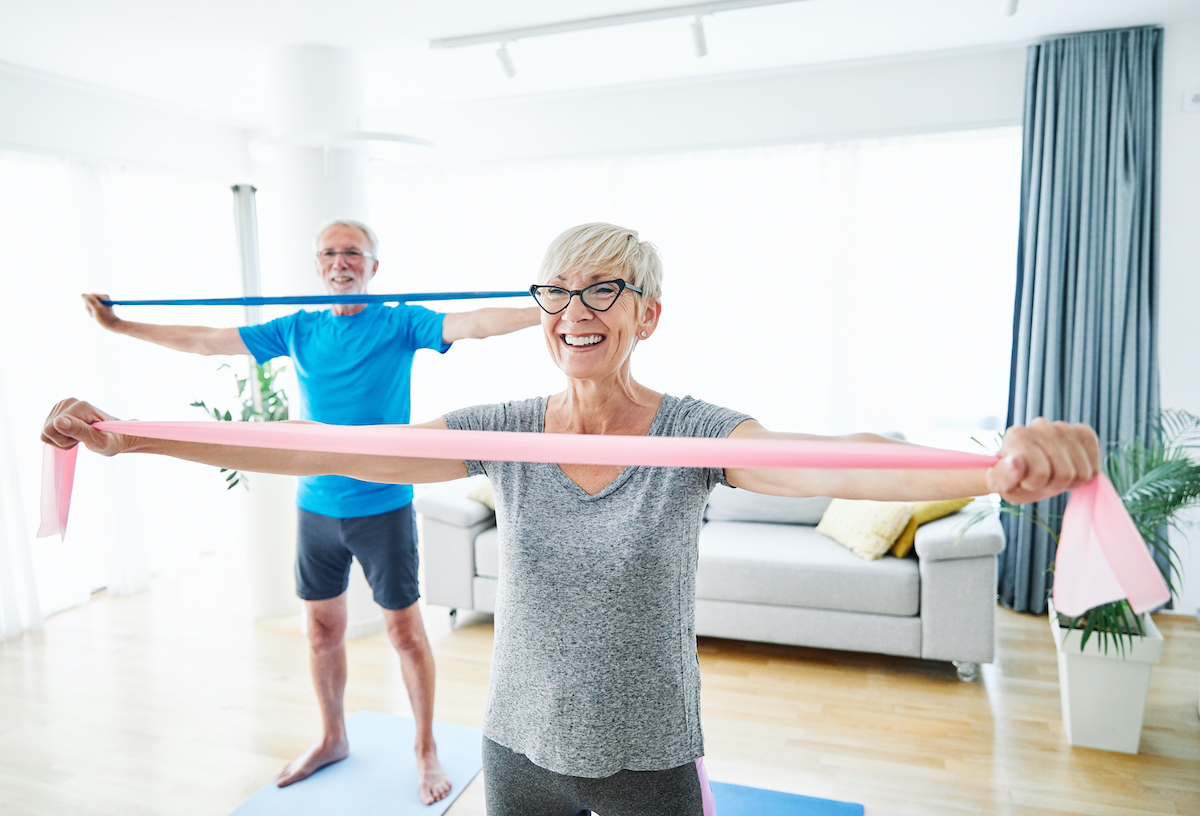
Strength training preserves muscle mass and supports daily tasks like climbing stairs or carrying groceries.
Beginner-friendly strength exercises:
- Chair squats: Strengthen thighs and hips
- Wall push-ups: Build upper-body strength
- Resistance band rows: Improve posture and back muscles
- Bicep curls with light weights: Support arm strength
Two to three sessions per week can make a noticeable difference.
Balance Exercises to Prevent Falls
Balance training improves stability and confidence while walking or standing.
Effective balance movements:
- Single-leg stand: Hold a chair for support
- Heel-to-toe walk: Step in a straight line
- Weight shifts: Shift weight slowly from one foot to the other
- Tai chi-style movements: Slow, flowing motions for control
Practicing balance daily, even for a few minutes, is highly effective.
Low-Impact Cardio for Heart Health

Cardiovascular exercise keeps the heart strong without stressing the joints.
Low-impact cardio options:
- Walking outdoors or on a treadmill
- Swimming or water aerobics for joint relief
- Stationary cycling at a comfortable pace
- Light dancing for fun and coordination
Aim for 20–30 minutes most days, adjusting intensity as needed.
Making Exercise a Lasting Habit
Consistency grows when exercise fits naturally into daily life.
Helpful habit-building strategies:
- Schedule workouts at the same time each day
- Choose activities you genuinely enjoy
- Exercise with friends or groups for motivation
- Track progress to celebrate improvements
Small steps, repeated often, lead to lasting results.
Frequently Asked Questions
1. How often should seniors exercise each week?
Most seniors benefit from physical activity most days of the week, combining strength, balance, and cardio exercises.
2. Is it safe to exercise with arthritis?
Yes, low-impact movements and gentle strength training often reduce stiffness and improve joint function.
3. What’s the best exercise for seniors with limited mobility?
Chair exercises, seated stretches, and water-based activities are excellent options.
4. Can seniors build muscle after age 65?
Absolutely. Muscle strength can improve at any age with consistent resistance training.
5. How long should each exercise session last?
Even 15–30 minutes per session provides meaningful health benefits.
6. Should seniors stretch every day?
Daily stretching improves flexibility and helps reduce muscle tightness.
7. What signs mean it’s time to stop exercising?
Stop immediately if you experience chest pain, dizziness, or sharp joint pain.
Staying active is one of the most powerful ways seniors can protect their health, confidence, and independence—at any age.


