How Hip Rotation Transfers Power Through BodyCombat Punches Without Overstriding
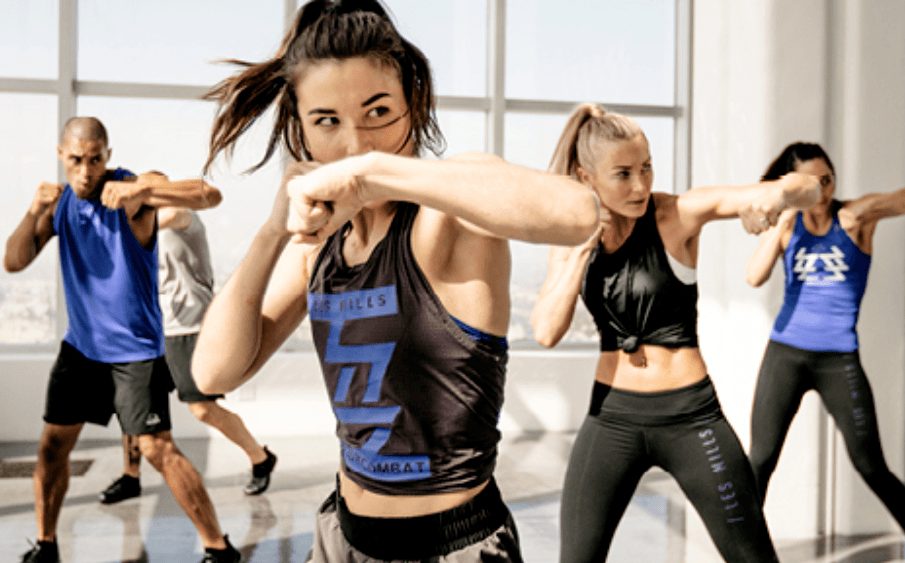
Punching power in a group-fitness setting should come from coordinated movement rather than an exaggerated reach. During a bodycombat class, the hips and torso help transfer force from the floor through the upper body while the feet maintain a stable base.
When participants step too far or rotate without moving the supporting foot, the punch may look larger while becoming less controlled. Better power begins with timing, not maximum reach.
Power Starts From the Floor
A punch is not produced by the arm alone. Pressure begins through the feet and travels through the legs, hips, torso, shoulder and hand.
The arm expresses the movement, but the lower body provides much of its foundation. When the feet are unstable, the torso cannot transfer force efficiently.
Participants should feel connected to the floor without gripping it rigidly.
Hip Rotation Should Match the Punch
Straight punches and cross-body strikes generally involve more rotation than short front-hand movements. The rear hip and torso turn as the punch extends.
This rotation should occur as one coordinated action. If the hips move after the arm has already reached, the lower body contributes little to the strike.
Smaller, well-timed rotation is usually more effective than a large delayed turn.
The Rear Foot Needs to Participate
When the rear hip rotates, the rear foot may need to pivot so the knee can follow the movement. Keeping the foot fixed while the torso turns can increase rotational demand through the leg.
The heel does not need to spin dramatically. The amount of pivot should match the movement and available floor grip.
Footwear that allows controlled turning can make this easier.
Overstriding Reduces Stability
Participants sometimes increase punching range by stepping far beyond their normal stance. The centre of mass moves outside the stable base, and returning to guard takes longer.
A long stance can also restrict hip rotation. The participant reaches with the shoulder rather than transferring force through the whole body.
A shorter step often allows faster recovery and better balance.
Range Should Not Exceed Control
The fist does not need to travel as far as possible. The punch should stop before the shoulder loses its organised position or the torso falls forward.
Full elbow locking is unnecessary. A small amount of control at the end of the punch supports a quicker return.
The working range should remain repeatable across the entire combination.
The Non-Punching Hand Supports the Movement
While one hand punches, the other usually remains near guard. Dropping the opposite hand can make the torso feel more open and less controlled.
Maintaining guard also supports rhythm. One hand returns as the other prepares.
This coordination becomes more important during fast combinations.
Rotation Should Not Become Side Bending
As fatigue increases, participants may lean sideways or forward to create the appearance of greater reach. This changes the movement from rotation into a less controlled torso shift.
The participant should remain tall enough to return quickly. Power should move through the torso rather than pull the body away from its base.
Reducing punch range can restore control.
Breathing Helps Coordinate Effort
A short exhalation during the punch can support rhythm and prevent unnecessary breath holding. It may also help participants avoid excessive neck and shoulder tension.
Breathing should remain natural enough for repeated combinations. Forceful breathing that disrupts timing is unnecessary.
The goal is coordination rather than performance theatrics.
Speed Should Follow Technique
Participants often try to increase power by moving the arms faster. If the lower body is late, the punch becomes disconnected.
Practising at a moderate tempo allows the feet, hips and hands to work together. Speed can increase once the sequence remains consistent.
A fast arm with unstable footwork does not represent useful progression.
Use Simple Self-Checks
Participants can monitor whether:
- The feet remain stable during extension.
- The rear foot turns when needed.
- The knee follows the direction of the toes.
- The torso rotates without collapsing.
- The punch returns quickly to guard.
- Balance is maintained for the next movement.
These checks are more useful than judging how far the fist travelled.
Studio Space Affects Punch Range
Crowded rooms can encourage participants to shorten punches abruptly or twist away from nearby people. Sufficient spacing supports predictable technique.
At True Fitness Singapore, instructor cueing and studio organisation can help members select movement ranges appropriate for the available space.
Participants should reduce travel and punch range before allowing the base to become unstable.
Efficient Power Looks Controlled
The strongest class punch is not necessarily the largest. Power comes from coordinated pressure, hip rotation and a stable return to guard.
When participants avoid overstriding, the lower body can contribute without sacrificing balance. This creates a sharper, more repeatable movement that remains useful even as combinations become faster.