

Leverage Changes in Backbends and Hip Opening with a Yoga Wheel
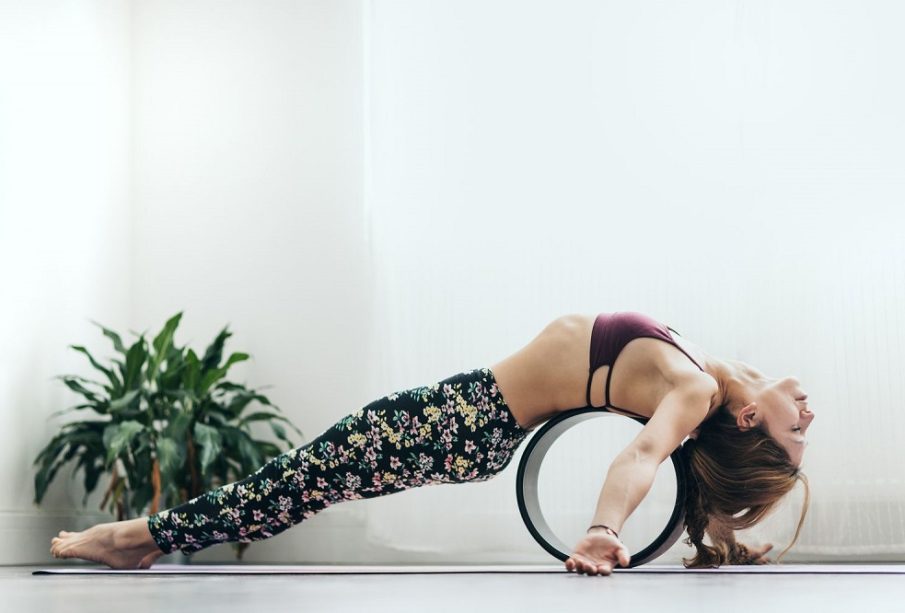
A curved prop can make a familiar pose feel entirely different. It may support part of the spine, raise the hands from the floor or give the legs something to press against. These changes are often described simply as assistance, but the more accurate explanation is that the prop alters leverage, contact and the route through which force travels.
Using a yoga wheel therefore requires more than placing it beneath the body and moving deeper. In backbends and hip-opening positions, a small adjustment in wheel location can shift demand from the thoracic spine towards the lower back, change the work required from the shoulders or increase pressure at the front of the hip. Understanding those changes makes the prop a tool for precision rather than depth.
What Leverage Means in a Wheel-Supported Pose
Leverage describes how force acts around a joint or body segment. The distance between the point of support and the joint being moved affects the muscular effort needed to control the position. Changing hand, foot or wheel placement can therefore make a pose easier in one area while making it more demanding elsewhere.
The wheel also creates a moving contact point. Unlike a block, it can roll as body weight shifts. That allows gradual exploration but requires control and braking.
Support should not be confused with passivity. When the wheel carries part of the torso, the abdominal muscles, legs and shoulders may still need to organise the position. If they disengage completely, movement may concentrate at the easiest spinal segment rather than distribute through the intended region.
Backbends Are a Whole-Body Action
A backbend does not occur only in the spine. Hip extension, shoulder flexion, rib movement and leg contribution all influence the final shape. If one area contributes less, another may move more.
Limited shoulder flexion can lead a practitioner to flare the ribs and extend the lower back when reaching overhead. Limited hip extension may create a similar compensation. Wheel placement can expose or amplify these strategies.
The goal is not to keep the spine rigid. Spinal extension is part of the movement. The aim is to avoid asking one small region to provide nearly all the visible range.
Wheel Placement Changes the Backbend
Support Beneath the Upper Back
Placing the wheel around the lower shoulder-blade region can encourage extension through the thoracic spine. The exact contact varies with body proportions, wheel size and setup. Supporting the head with the hands or an additional prop may reduce strain through the neck.
If the wheel sits too low, the movement may concentrate near the lower ribs or lumbar spine. If it sits too high, the neck may feel unsupported. Begin with a small recline and check where pressure is felt before adding arm movement.
Support Beneath the Mid-Back
A mid-back position creates a longer lever between the pelvis and upper body. The abdominal wall may need to control the rate of recline while the feet prevent sliding. This version can feel stronger rather than more restorative.
Keep both feet grounded and use the hands for support while learning the route. A wheel that rolls unexpectedly can take the practitioner further than intended.
Hands Elevated on the Wheel
In kneeling or lunge-based backbends, placing the hands on the wheel elevates the floor. This may reduce the distance required from the shoulders or spine. However, the curved surface can move, so downward and slightly stabilising pressure is needed.
The elevated hand position may make the pose accessible, but it should not be used to pull the chest aggressively forwards. The hips, ribs and shoulders still need coordinated control.
Hip Opening Is Not One Movement
“Hip opening” can refer to flexion, extension, external rotation, abduction or a combination. Each direction involves different joint mechanics. A wheel setup that assists a hip-flexor position is not automatically appropriate for a rotation-based pose.
Individual anatomy also influences range. The orientation of the hip socket and shape of the upper femur affect how movement feels. A hard, local stop may reflect compression rather than a muscle that needs more stretching.
The wheel can change pelvic angle or support a limb, but it cannot make every body express an identical shape.
Leverage in Common Hip-Focused Setups
Supported Low Lunge
With the wheel beneath the hands, a practitioner can keep the torso more upright while exploring hip extension in the back leg. Moving the wheel further forwards increases the reach and may encourage the ribs to flare. Keeping it closer reduces that lever.
The front foot should remain stable, and the back knee needs suitable padding. Rather than driving the pelvis down, lengthen through the trunk and explore a small forward weight shift.
Hamstring-Focused Lunge
Rolling the wheel forwards with the hands while the front leg straightens changes both hip flexion and upper-body leverage. The further the wheel travels, the more control is required to prevent collapsing into the lower back or overstretching behind the knee.
Maintain a slight knee bend if needed and stop before the pelvis is pulled into an uncontrolled rotation. The wheel should follow the body, not drag it.
Reclined Leg Support
Placing a lower leg on the wheel during a reclined position can reduce holding effort. Because it can roll, the opposite foot and trunk must stabilise.
How to Control a Rolling Prop
Begin on a non-slip mat and inspect the wheel for damage, moisture or a loose outer layer. The surrounding floor should be clear. Jewellery, loose clothing and long hair should not become trapped beneath it.
Use several points of contact while learning. Two feet and one or both hands create more options than balancing through a single contact. Move only far enough that returning remains controlled.
The exit matters as much as the entry. Plan where the wheel will go when body weight shifts away from it. A practitioner should not need to drop suddenly or twist to escape the position.
Signs That Leverage Is Working Against You
The pose may need adjustment if the wheel repeatedly rolls away, the breath becomes held or pressure feels sharp and localised. Shaking is not always dangerous, but increasing shaking combined with lost control suggests that the lever is too demanding.
In a backbend, watch for the ribs lifting dramatically while the upper back barely changes. In a lunge, notice whether the front foot loses pressure or the pelvis twists to create more apparent depth. Reduce the reach, reposition the wheel or choose a fixed prop.
When a Different Prop Is Better
A wheel is not the best tool for every objective. Blocks offer a fixed hand height, a bolster provides broad passive support and a strap can limit range without rolling. Choosing a less mobile prop is good judgement when stability is the priority.
At Yoga Edition, guided wheel practice can help participants understand mechanical changes before attempting larger ranges independently. Instructor feedback is useful when the moving prop makes compensation difficult to identify.
People with recent injuries, surgery, significant osteoporosis, uncontrolled pain, dizziness or relevant spinal and joint conditions should seek appropriate professional guidance. A wheel does not make a backbend medically suitable.
Conclusion
The wheel changes a pose by changing support, distance and force. In backbends, its location can redistribute spinal and shoulder demand. In hip-focused positions, its rolling surface can alter pelvic control and the amount of muscular braking required.
Useful progress is not measured by how far the wheel travels. It is shown by a practitioner who can identify the intended movement, maintain stable contact and return without losing control.
Frequently Asked Questions
Does a larger wheel make backbends easier?
Not always. A larger diameter changes the curve and starting height, which may increase range for some bodies. Comfort depends on body proportions, experience and the intended contact point.
Why does the wheel slide away in a lunge?
The reach may be too long, the surface may lack friction or body weight may be directed forwards without enough braking. Move the wheel closer and use a non-slip mat.
Should the wheel press directly into the lower back?
Strong local pressure over the lumbar region may be uncomfortable and can encourage movement to concentrate there. Reassess placement and use a smaller range.
Can the wheel replace blocks in every pose?
No. Blocks provide fixed support, while a wheel rolls. Use blocks when a predictable hand or limb position is more important than moving support.
How do I know whether I am opening my hips or twisting my pelvis?
Observe whether both sides of the pelvis remain oriented as intended and whether one foot loses contact. A smaller range or instructor feedback can make the distinction clearer.
Is mild shaking acceptable?
Small muscular tremors can occur with unfamiliar effort. Stop or reduce the pose if shaking increases, the wheel becomes unstable or breathing and joint comfort deteriorate.


