

How Bodyweight Exercises Transform Overall Fitness
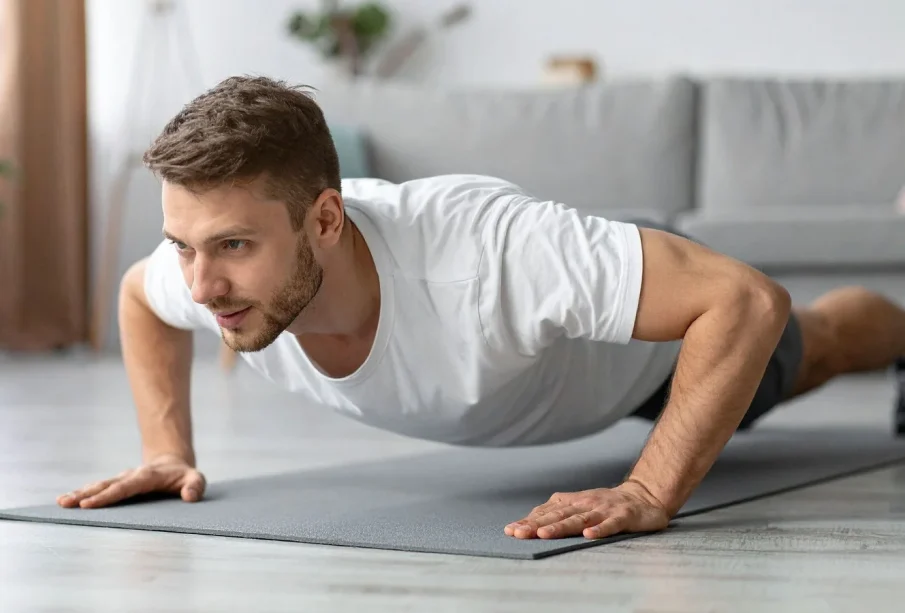
Bodyweight training proves that you don’t need a gym or equipment to build strength, mobility, and endurance. By using your own body as resistance, these exercises develop practical fitness that carries over into everyday movement, sports, and long-term health. Simple in form yet powerful in effect, bodyweight exercises remain one of the most effective ways to train at any level.
Understanding Bodyweight Training
Bodyweight exercises rely on gravity and body mass rather than external weights. Movements like squats, push-ups, and planks engage multiple muscle groups at once, making workouts efficient and functional.
Unlike machine-based training, bodyweight workouts improve how your body moves as a whole. They emphasize coordination, balance, and joint stability alongside strength.
Full-Body Strength Without Weights
One of the biggest advantages of bodyweight training is its ability to build balanced, full-body strength.
Key strength benefits include:
- Activation of multiple muscle groups per movement
- Improved core engagement during nearly every exercise
- Reduced muscle imbalances compared to isolated machine work
Exercises such as push-ups, squats, lunges, and dips strengthen the upper body, lower body, and core simultaneously.
Improved Mobility and Joint Health
Bodyweight exercises naturally encourage movement through a full range of motion, which supports joint flexibility and mobility.
How mobility improves:
- Joints move through natural patterns
- Muscles lengthen and strengthen together
- Reduced stiffness from prolonged sitting
Movements like deep squats, controlled lunges, and dynamic stretches help maintain joint health as the body adapts to regular motion.
Core Strength and Postural Control
Nearly every bodyweight exercise challenges the core, even when it isn’t the primary focus.
Core-related benefits:
- Better spinal support and posture
- Improved balance and stability
- Reduced risk of lower back discomfort
Exercises such as planks, mountain climbers, and hollow holds strengthen deep core muscles that support daily movement.
Cardiovascular Fitness and Endurance
When performed continuously or in circuits, bodyweight exercises elevate heart rate and improve cardiovascular endurance.
Effective bodyweight cardio movements:
- Burpees
- Jump squats
- High knees
- Mountain climbers
These exercises improve heart health while also building muscular endurance, making workouts both time-efficient and challenging.
Scalability for All Fitness Levels
Bodyweight training adapts easily to beginners and advanced athletes alike.
Ways exercises scale naturally:
- Beginners use modified versions (knee push-ups, assisted squats)
- Progression comes from tempo control, reps, and variations
- Advanced users increase difficulty with single-leg or explosive movements
This flexibility makes bodyweight training sustainable for long-term fitness.
Mental Focus and Movement Awareness
Bodyweight workouts require concentration and control, fostering a stronger mind–muscle connection.
With fewer external distractions, individuals often become more aware of posture, breathing, and movement quality. This awareness leads to better technique and reduced injury risk over time.
Building Consistency Anywhere
One of the most transformative aspects of bodyweight training is accessibility.
Why consistency improves:
- No equipment or gym required
- Can be done at home, outdoors, or while traveling
- Short sessions remain effective
Consistency, more than complexity, is what drives real fitness transformation.
Frequently Asked Questions
1. Are bodyweight exercises enough to build muscle?
Yes, when performed with proper form and progressive difficulty, they effectively stimulate muscle growth.
2. How long does it take to see results from bodyweight training?
Many people notice improvements in strength and endurance within 3–4 weeks of consistent training.
3. Can bodyweight exercises replace gym workouts?
For many fitness goals, bodyweight training can fully replace gym-based routines.
4. How often should bodyweight workouts be done?
Most individuals benefit from 3–5 sessions per week, depending on intensity.
5. Do bodyweight exercises help with fat loss?
Yes, especially when combined with circuit-style training and proper nutrition.
6. Are bodyweight exercises safe for beginners?
They are generally very safe, as movements can be modified to match ability levels.
7. Can older adults benefit from bodyweight training?
Absolutely. Bodyweight exercises improve strength, balance, and mobility at any age.
Bodyweight exercises transform overall fitness by strengthening the body as a connected system—building resilience, efficiency, and confidence without the need for equipment.


